
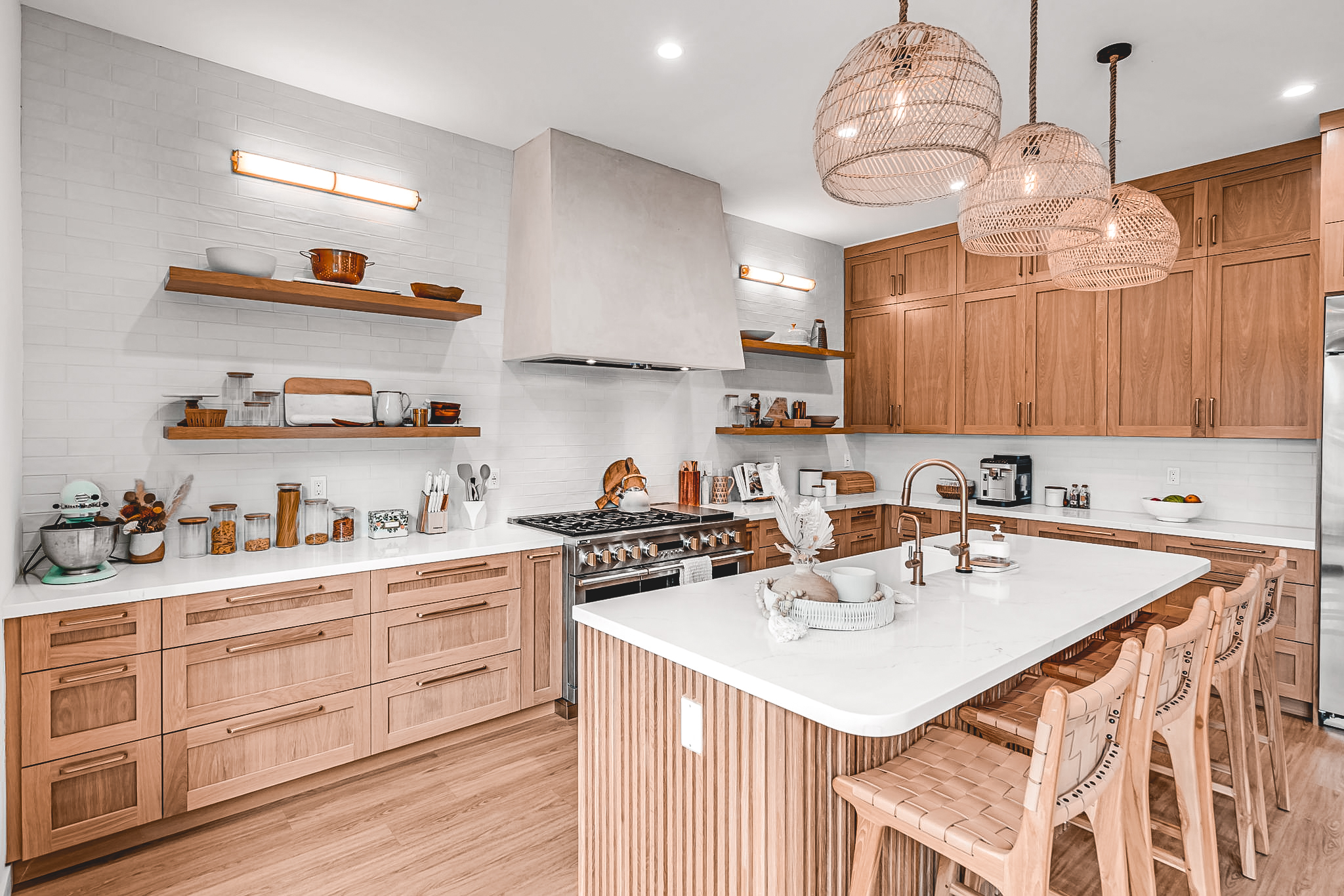
With so many kitchen countertop options to choose from, picking the right material can sometimes feel overwhelming. When basic types of kitchen countertop materials include natural stone, engineered stone, laminates, and wood, you’ll quickly learn that this list is just scratching the surface (no pun intended) and are only a few types of surfaces to choose from. To add to the anxiety, you know that the perfect countertop is only one choice away from taking an ordinary kitchen from a functionally fabulous space to a mismatched nightmare. The good news is, today, we’re going to explore natural stone options homeowners love to help you narrow down your choices – more specifically, four very different types that look great and carry their own key characteristics. They are:
Before we begin, here are a few questions that we are often asked.
What are natural stone countertops?
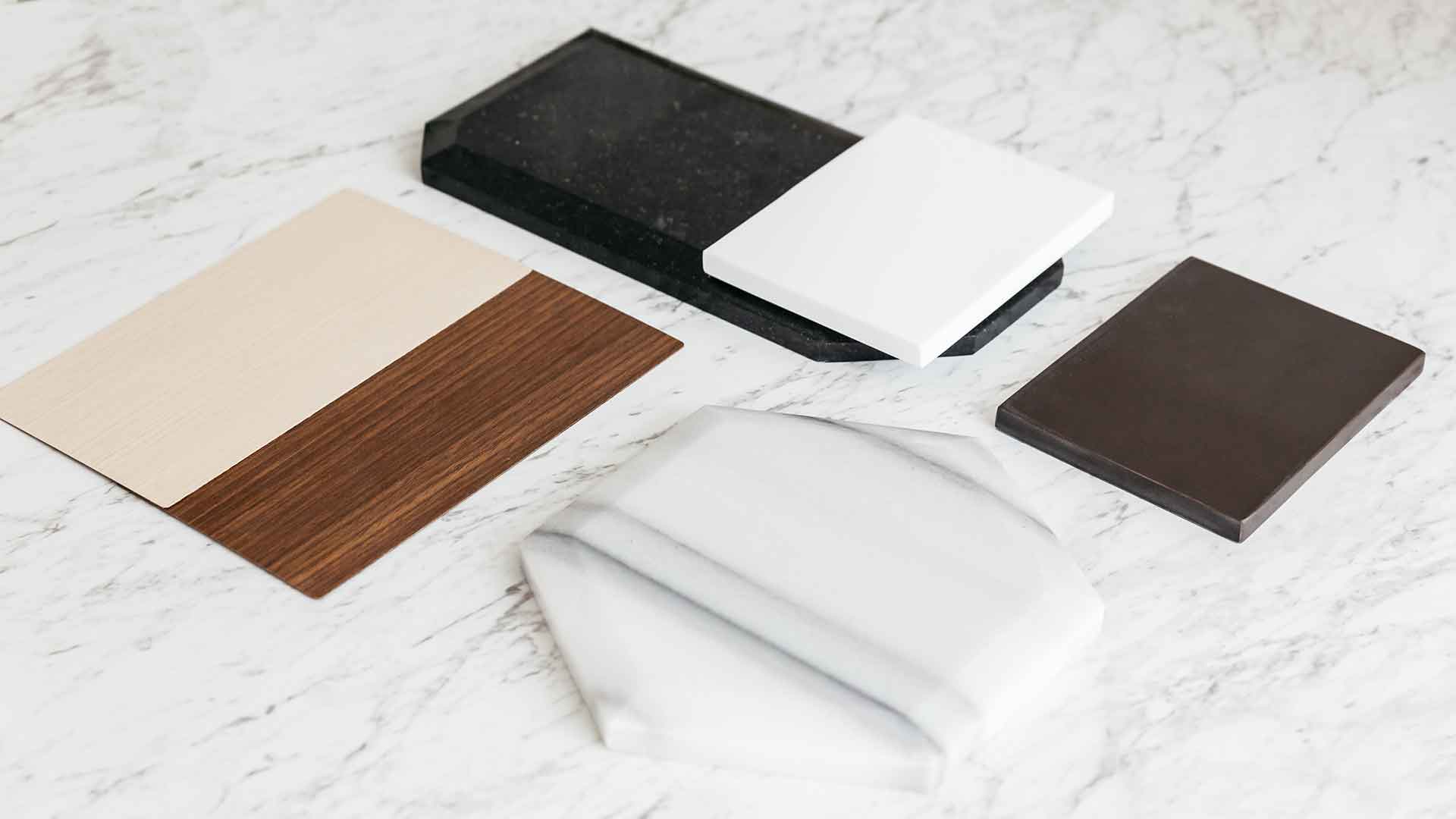
Natural stone countertops are surfacing materials cut from solid, natural rock – such as granite, marble, quartzite (quartz), and soapstone – mined from quarries. Prized for their unique, organic, and luxurious appearance, these countertops are highly durable, heat-resistant, and, when properly sealed, hygienic for high-traffic kitchens and bathrooms.
Why do homeowners love natural stone countertops?
Homeowners love natural stone countertops, such as granite, marble, and quartz, because they offer a unique combination of timeless, one-of-a-kind aesthetic beauty and extreme, long-lasting durability. They increase home resale value, withstand heat and daily wear, and provide a luxurious, high-end feel that suits various design styles.
Why do so many homeowners prefer natural stone over other materials?
- Unmatched Aesthetic Appeal: Because they are natural, no two slabs are alike, providing unique veining, color variations, and patterns.
- Exceptional Durability: These materials are highly resistant to scratches, dents, and stains.
- Heat Resistance: They can handle hot pots and pans directly from the stove, a key benefit in busy kitchens.
- High ROI and Value: They are considered a “permanent” upgrade, increasing the overall property value and attracting prospective buyers.
- Long-Term Investment: With proper sealing and maintenance, they can last for decades, often outliving the surrounding cabinetry.
- Easy Care: They are relatively low-maintenance, requiring only simple cleaning with water and mild soap.
4 Natural Stone Kitchen Countertop Options Homeowners Love & We Recommend To Make Your Kitchen Remodel Stand Out
Now that you have some basic knowledge about natural stone, let’s jump into the part you’ve been asking for.
1. Granite Countertops
Granite countertops are premium kitchen and bathroom surfaces made from natural, igneous rock quarried from the Earth. Known for durability, they are heat and scratch-resistant, making them popular for high-use areas. Each slab is unique, featuring distinct, non-uniform colors and mineral patterns.
Key Characteristics of Granite Countertops:
- Natural Uniqueness: Unlike engineered quartz, granite is 100% natural stone. No two slabs are identical, offering unique colors and veining.
- Durability: It is extremely dense and hard—second only to diamonds—making it highly resistant to heat, scratches, and damage.
- Maintenance: Granite is porous and requires sealing (typically annually) to prevent stains, according to YouTube. It is easy to clean with mild soap and water, notes Stone Amperor.
- Appearance: They come in a wide range of colors—from vibrant blues to subtle whites, blacks, and reds—depending on the mineral composition.
- Value: Because they are considered a high-end, long-lasting material, they often increase a home’s resale value, says Stone Innovations.
- Cost: Costs range from around $35-$50 per square foot for basic options to over $200 per square foot for exotic colors.
- Installation: Visible seams are common, which may be more prominent depending on the stone color.
2. Marble Countertops
Marble countertops are luxurious, natural stone surfaces made from metamorphic rock, prized for their timeless beauty, unique veining, and bright appearance. Popular in kitchens and bathrooms, they are heat-resistant and cool to the touch (ideal for bakers), but require regular sealing and careful maintenance to avoid staining, scratching, and etching from acidic substances.
Key Characteristics of Marble Countertops
- Unique Aesthetics: No two marble slabs are identical. Each features distinct veining—non-white streaks caused by mineral impurities trapped during formation.
- Durability: While durable enough to last a lifetime, marble is softer and more porous than granite, making it susceptible to scratches and acidic etching (e.g., from lemon juice or vinegar).
- Maintenance: Requires sealing upon installation and regular, consistent resealing to prevent stains.
- Cool Surface: Marble naturally stays cooler than room temperature, which helps keep dough from sticking or melting during pastry preparation.
- Varied Colors: While white (like Carrara or Calacatta) is most popular for its brightness, marble also comes in beige, green, gray, and dramatic black.
- Softness: On the Mohs hardness scale, marble typically ranks between 3 and 5, making it softer and more prone to scratches than granite or quartz.
- Cost: Costs vary widely based on rarity and origin, often ranging from $40 to over $100 per square foot, with options like Carrara being more budget-friendly. Rare or exotic slabs can exceed $180 per square foot.
- Installation: Installing marble countertops is a complex, precision-based task that typically takes 10–15 business days from the initial template to final placement. Because marble is both heavy and brittle, professional installation is strongly recommended to prevent cracking and ensure a perfect fit.
3. Soapstone Countertops
Soapstone countertops are a natural, non-porous metamorphic rock (steatite) known for a soft, matte, and velvety feel, commonly in shades of light-to-charcoal gray with subtle veining. They are highly favored for being heat-resistant, stain-resistant, and durable, though they can scratch easily and require oiling to achieve a darker patina.
Key Characteristics of Soapstone Countertops
- Unique Aesthetic: It offers a classic, rustic, or modern look with a smooth, warm texture.
- Durability: Although softer than quartz, it is less likely to crack.
- Maintenance: Surface scratches can be easily removed by sanding or applying oil.
- Non-Porous: Unlike granite or marble, soapstone does not need sealing and resists stains, bacteria, and chemicals, making it excellent for kitchens.
- Heat Resistance: It is highly impervious to heat; hot pots can be placed directly on the surface without damage.
- Natural Aging: Soapstone typically starts as light gray and naturally darkens over time with use. Mineral oil is often applied to speed up this process for an even, dark charcoal finish.
- Cost: Mid-to-upper range, often ranging from $70 to $120 per square foot installed.
- Installation: Soapstone is unique in the world of natural stone because it is softer and more workable, making it one of the few stone options that experienced DIYers can actually install themselves. However, professional installation remains the standard due to the stone’s extreme weight and the precision required for seamless joints.
4. Quartz Countertops
Quartz countertops are engineered stone surfaces made from crushed natural quartz bound together with resins and pigments. They are durable, non-porous, and resistant to stains and scratches, making them popular for kitchens and bathrooms. Unlike natural stone, they require no sealing and offer consistent, customizable patterns. Unlike granite or marble, which are cut directly from the earth in slabs, quartz is a man-made product designed to offer the beauty of natural stone with enhanced durability and easier maintenance.
Key Characteristics of Quartz Countertops
- Composition: Composed of roughly 90%–93% crushed natural quartz (a very hard mineral) and 7%–10% binders (resins and polymers).
- Durability: Quartz is one of the hardest minerals on Earth, making these countertops extremely resistant to scratches and chips. They are non-porous, meaning they resist staining, bacteria, and mold without requiring sealant.
- Maintenance: Easy to clean and maintain, usually requiring only soap and water.
- Appearance: They are engineered for consistent color and pattern, offering a wide range of styles, from modern solid colors to designs that mimic marble or granite. : Since they are manufactured, patterns and colors are uniform across slabs, making it easier to match seams in large kitchens.
- Heat Sensitivity: While durable, they can be damaged by extreme heat; therefore, using trivets or hot pads is recommended.
- Cost: Quartz countertops typically cost between $50 and $150 per square foot installed. For a standard kitchen (approximately 30–40 square feet), most homeowners spend between $3,000 and $5,500 for the total project, including materials, fabrication, and labor.
- Installation: Professional installation is essential because quartz slabs are extremely heavy – roughly 20–25 lbs per square foot.
Are Natural Stone Countertops Right For You?
In conclusion, the best countertop for you depends on whether you prioritize natural uniqueness, durability, or low maintenance.
Key Takeaways
- Maintenance: Quartz is the only non-porous option that never needs sealing. Soapstone is also non-porous but is often oiled to darken its color. Both Granite and Marble are porous and require regular sealing to prevent stains.
- Durability: Granite is the hardest natural stone, resisting scratches and high heat from pans. Quartz is equally hard but can be damaged by temperatures over 150°F. Marble and Soapstone are softer and can scratch, though soapstone scratches can be sanded out by the homeowner.
- Aesthetics: If you want a consistent look with many color options, Quartz is the best choice. For a “one-of-a-kind” slab with natural depth and movement, choose Granite or Marble. Soapstone is preferred by those seeking a matte finish that develops a natural “patina” (aged look) over time.
Choosing between these four materials depends on your tolerance for maintenance versus your desire for natural stone performance. Quartz is the best all-around performer for low maintenance, while Granite offers the best heat resistance for heavy cooking. Marble is a luxury choice that requires high care, and Soapstone provides a unique, rustic look that is chemically inert and easy to repair.
Are you ready to change the look of your kitchen?
At Builder Boy, we are committed to offering viable building and remodeling solutions to homeowners and business owners alike. We are bringing beauty, form, and function back into every home, office, and building we rebuild, retouch, and restore. Our team of experts are dedicated to their craft and will work relentlessly to turn your dream into a reality. Diligent planning, expert opinions, clear-cut organization, honest communication, quality materials and quality craftsmanship are keys to our business success. We assure the swift and solid construction of any project. With every improvement project we accept, we aim to work with our clients to build a better home or business that will not only add beauty to the community but will boost the value of the property and quality of life.
Frequently Asked Questions (FAQ)
Which natural stone is the most durable for a busy kitchen?
Granite is widely considered the most durable choice for high-traffic kitchens. It is extremely dense, highly resistant to heat, and stands up very well to daily wear and tear, making it an excellent long-term investment.
Do I really need to seal my natural stone countertops?
Yes, most natural stones like granite and marble are porous and require periodic sealing (typically annually) to prevent stains and moisture absorption. Soapstone, however, is non-porous and does not require sealing, though it does benefit from occasional oiling.
What is the main difference between natural stone and quartz?
Natural stone (like granite or marble) is quarried directly from the earth, meaning every slab is unique. Quartz is an engineered stone made from crushed natural quartz mixed with resins, offering a more consistent pattern and requiring less maintenance since it does not need to be sealed.
Why is marble often recommended for bakers?
Marble is naturally cool to the touch and stays below room temperature. This unique characteristic makes it a favorite among bakers, as it prevents dough from sticking or melting during preparation.
 Builder Boy
 Builder Boy
 Builder Boy
 Builder Boy
 Builder Boy
 Builder Boy
 Builder Boy
 Builder Boy